

JSW MG Motor India has officially confirmed a new energy vehicle debut on July 16, 2026. The company's teaser carries the message: "Internet Inside transformed the way India drove. Now, it's time to power the next evolution. Join us as we redefine the way India thinks about New Energy Vehicles." The reference to "Internet Inside" is a direct nod to the original Hector, which launched in 2019 and brought connected car technology to the mass-market SUV segment in India.
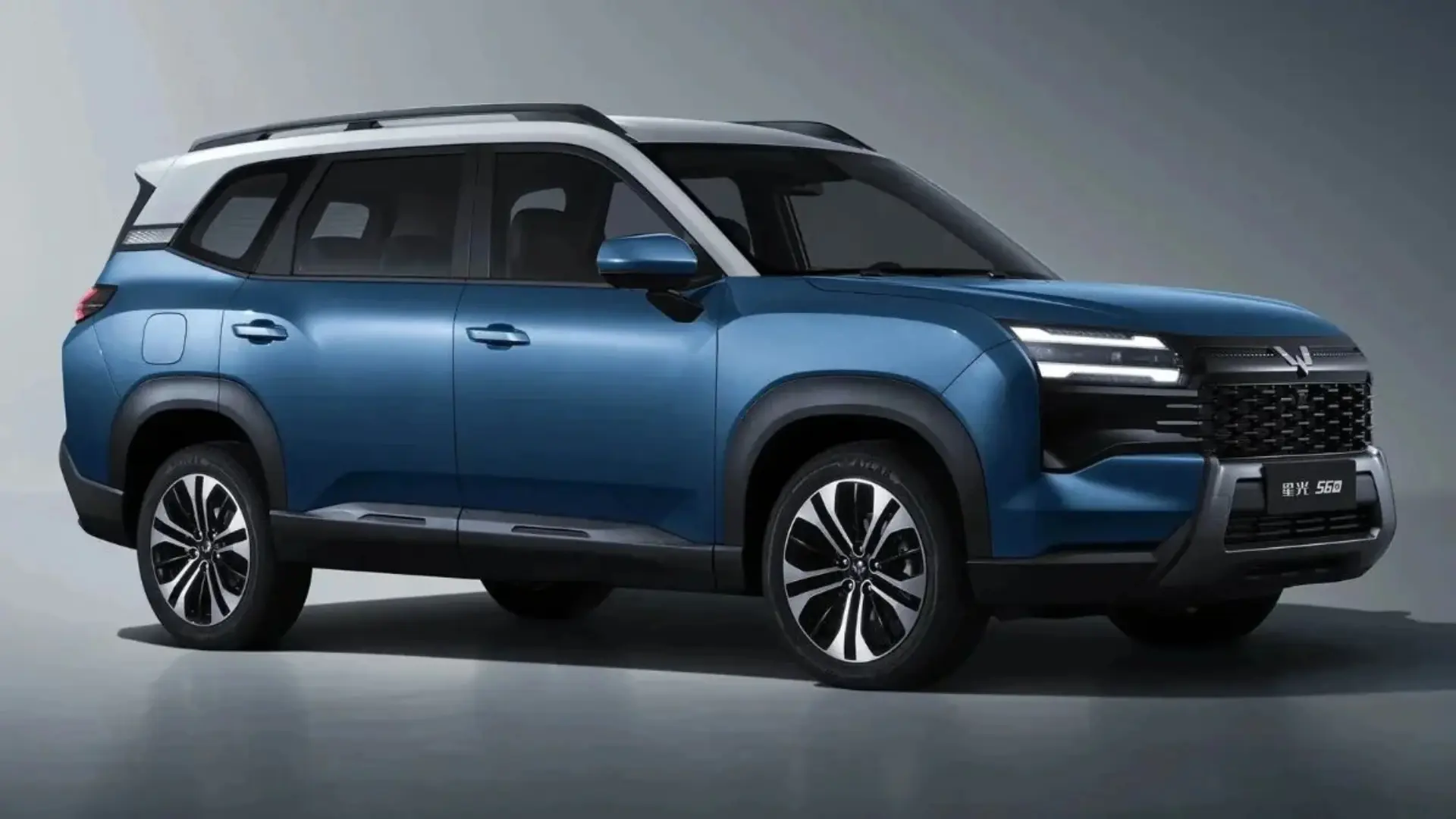
No model name or specifications have been officially confirmed. However trademark filings for "Hector Hawk" and "Hector Hawk Plus," a design patent for the Wuling Starlight 560 filed in India in March 2026, an internal codename of "520" and multiple test mule sightings on Indian roads all point to the same product — the Wuling Starlight 560, rebadged and adapted for India in both PHEV and BEV forms under the Hector Hawk name.
What Is the Wuling Starlight 560?
The Wuling Starlight 560 is a mid-size three-row SUV sold across several Asian markets. It measures 4,745mm in length, 1,850mm in width and 1,755mm in height, with a 2,810mm wheelbase — making it noticeably larger than the existing Hector. It is available in both 5-seat and 7-seat configurations.
The PHEV variant pairs a 1.5-litre Atkinson-cycle naturally aspirated petrol engine with an electric motor and a 20.5 kWh battery pack, offering approximately 100 km of electric-only range and a combined claimed range of around 1,100 km. The BEV variant uses a 69.2 kWh battery with a 201 HP front-mounted electric motor and a CLTC-claimed range of 530 km. Combined output on the PHEV is approximately 197 PS and 230 Nm.
The cabin features a 12.8-inch touchscreen infotainment system, an 8.8-inch digital instrument cluster, powered and ventilated front seats, panoramic sunroof, wireless charging, automatic climate control with rear vents and 6 airbags with ADAS. India-spec powertrains and features have not been confirmed.
Where It Fits
If the Hector Hawk PHEV launches as expected, it will be India's first mainstream mass-market plug-in hybrid SUV in the proper sense — a genuine plug-in with meaningful electric-only range, not a mild hybrid or a self-charging setup. No current mainstream three-row SUV in India offers a PHEV powertrain. The Mahindra XUV 7XO and Tata Safari are the closest competitors on size and positioning but neither offers a plug-in hybrid option.
For buyers who want electrification but remain cautious about public charging infrastructure — particularly apartment dwellers without dedicated parking — a PHEV addresses the core concern. City commutes within the electric range run on battery, while the petrol engine handles longer trips without requiring a fast charger en route.
The BEV version will compete in a more crowded space — the Mahindra XEV 9S, BYD eMax 7, Kia Carens Clavis EV, VinFast MPV 7 and the upcoming Tata Safari EV are all in or entering the same segment.
The Windsor Context
JSW MG's monthly sales have been under pressure. The Windsor EV has been carrying the bulk of the company's volumes since its launch — a dependence that has pushed JSW-MG's strategy into an entirely new segment with two powertrain options, reducing that dependence and broadening the company's NEV portfolio meaningfully.
What Happens Next
July 16 is a debut, not a launch. Pricing and final specifications will be confirmed closer to the market launch, which is expected ahead of Diwali 2026. Pricing is expected to start from around ₹20 lakh ex-showroom for the PHEV — though this has not been officially confirmed.

No comments yet